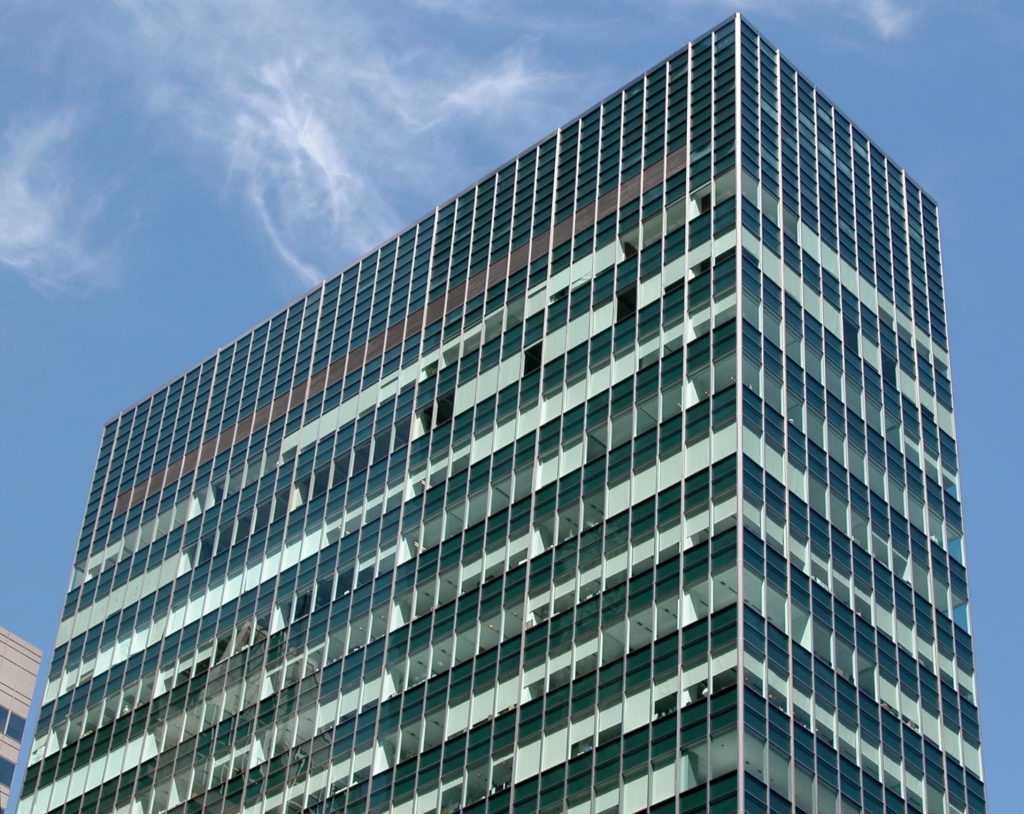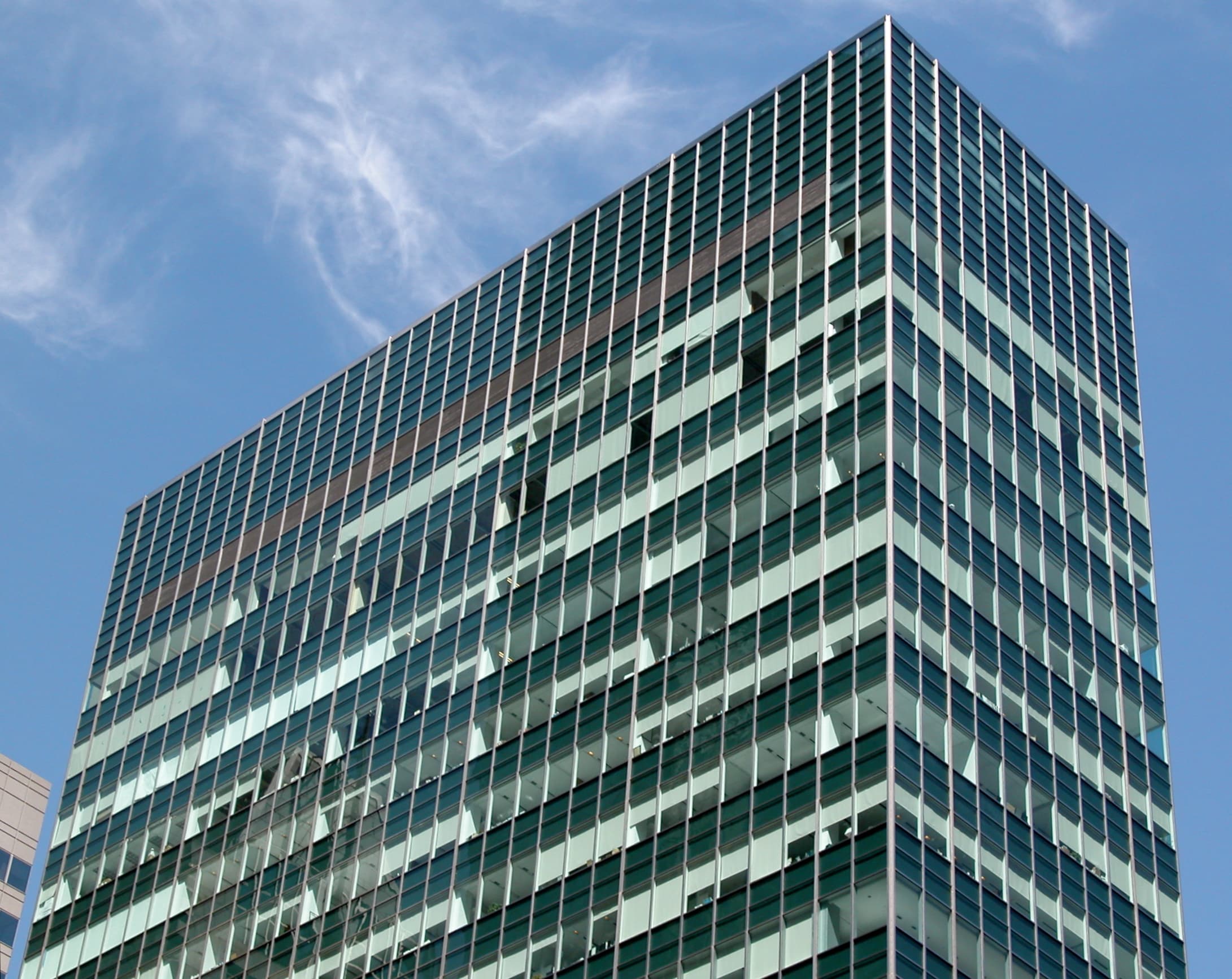
This 1952 building adheres to the International Style and was, at the time, the second self-supporting building with a glass facade in New York.
In one of our first articles, we discussed the German architect Mies van der Rohe and one of his most emblematic buildings: the Farnsworth House, on the outskirts of Chicago. This same architect designed the Seagram Building in Midtown Manhattan: another building that is a paradigmatic example of the Rationalist movement, which van der Rohe championed. And across the street, just eighty meters from the Seagram Building, is the building we’re going to talk about this time: Lever House, by Natalie de Bois and Gordon Bunshaft.
Today, among all the skyscrapers of New York, this office building goes almost unnoticed. It is surrounded by equally imposing buildings, glass facades, and towers of up to eighty-five stories that dwarf Lever House’s ninety-four meters in height. But its construction, completed in 1952, marked a turning point for New York City and for corporate cities around the world.
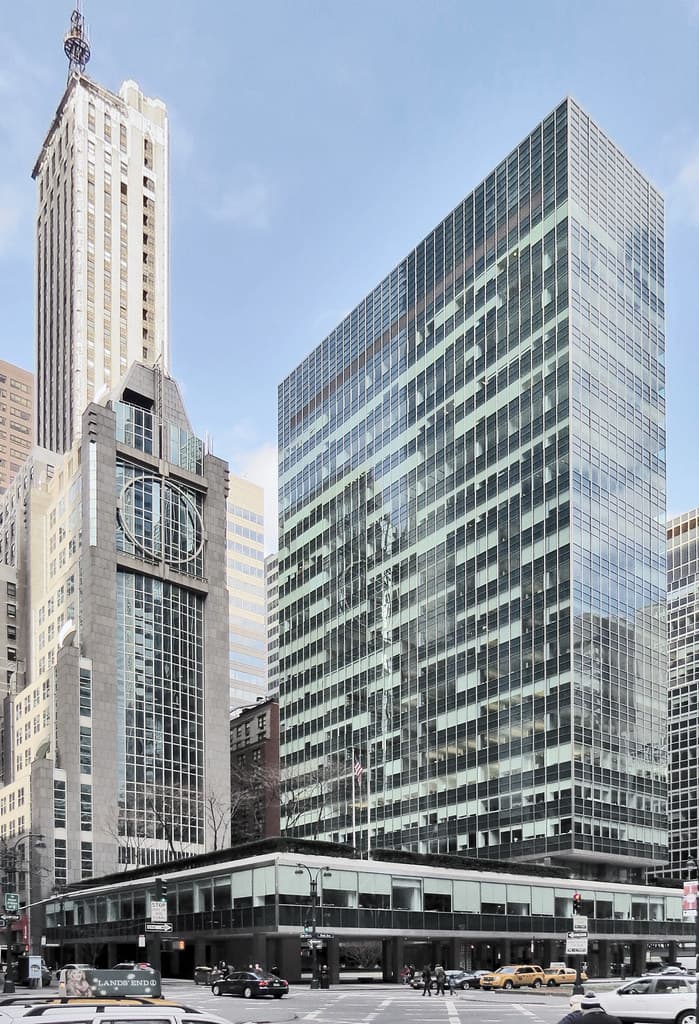
The origin of modern corporate aesthetics
When Natalie de Bois and Gordon Bunshaft designed the building, the rationalist movement was on the zeitgeist. This movement prioritized functionality over aesthetics, was structured around the motto “less is more,” and sought to reflect the advances in construction technology and the economic prosperity of the capitalist bloc countries during the Cold War, which could afford complex engineering and high-quality materials, such as tempered glass and structural steel.
The rationalist movement, which in turn gave rise to the International Style (to which the aforementioned buildings belong), was imported to the United States by European architects like van der Rohe during the 1930s, and by the 1950s it had become a hallmark of American identity.
This style has defined what we understand today as corporate aesthetics. The characteristics that we now take for granted in the world of office architecture, such as rectangular or square floor plans, 90-degree angles in facades, sliding windows arranged in grids, and cubic forms, have their origins in buildings like Lever House.
A glass skyscraper: the revolution of the self-supporting structure
De Bois and Bunshaft put into practice a concept that had been little used until then, but which, after the construction of Lever House, would become popular and eventually the norm: the self-supporting structure. This is a construction system capable of supporting its own weight without needing external structural elements to remain standing.
This structural independence is achieved through the use of lightweight materials that can withstand both the building’s own weight and wind force without collapsing or excessively deforming.
Lever House utilizes a type of self-supporting structure called a curtain wall. The Lever House curtain wall features vertical steel mullions connected to the building’s floor slabs. Each pair of mullions is separated by fixed glass panels, giving the building a visual continuity that was groundbreaking for its time: De Bois and Bunshaft had managed to clad a twenty-one-story building in glass that didn’t shatter in the wind.
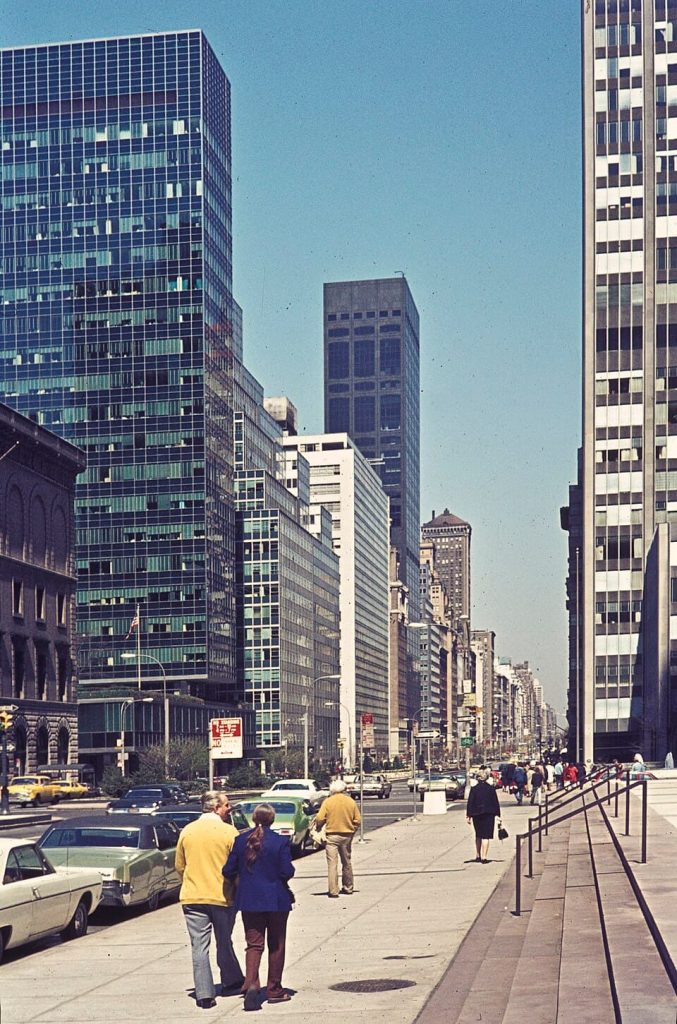
Glass curtains to blur the line between private and public space
One of the hallmarks of rationalist buildings is their walkable ground floors. The building’s facade itself supports its weight, and since the entire load rests on the steel column structure, walls can be added or removed without affecting the structural integrity. Taking advantage of this feature, Lever House leaves the street-level space accessible. The entire building is elevated above itself, and one can literally walk beneath it.
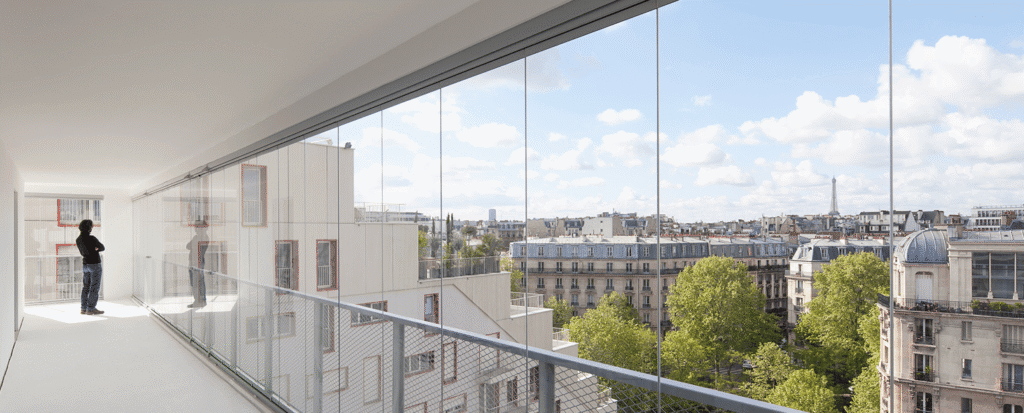
And around this “void,” an interior courtyard is built, enclosed by a gallery made of glass curtains, which houses a restaurant, offices, and the entrance to the building itself.
One of the concerns of the architects of the International Style was that the minimalism and industrialism of the new buildings conveyed an excessively cold and detached image.
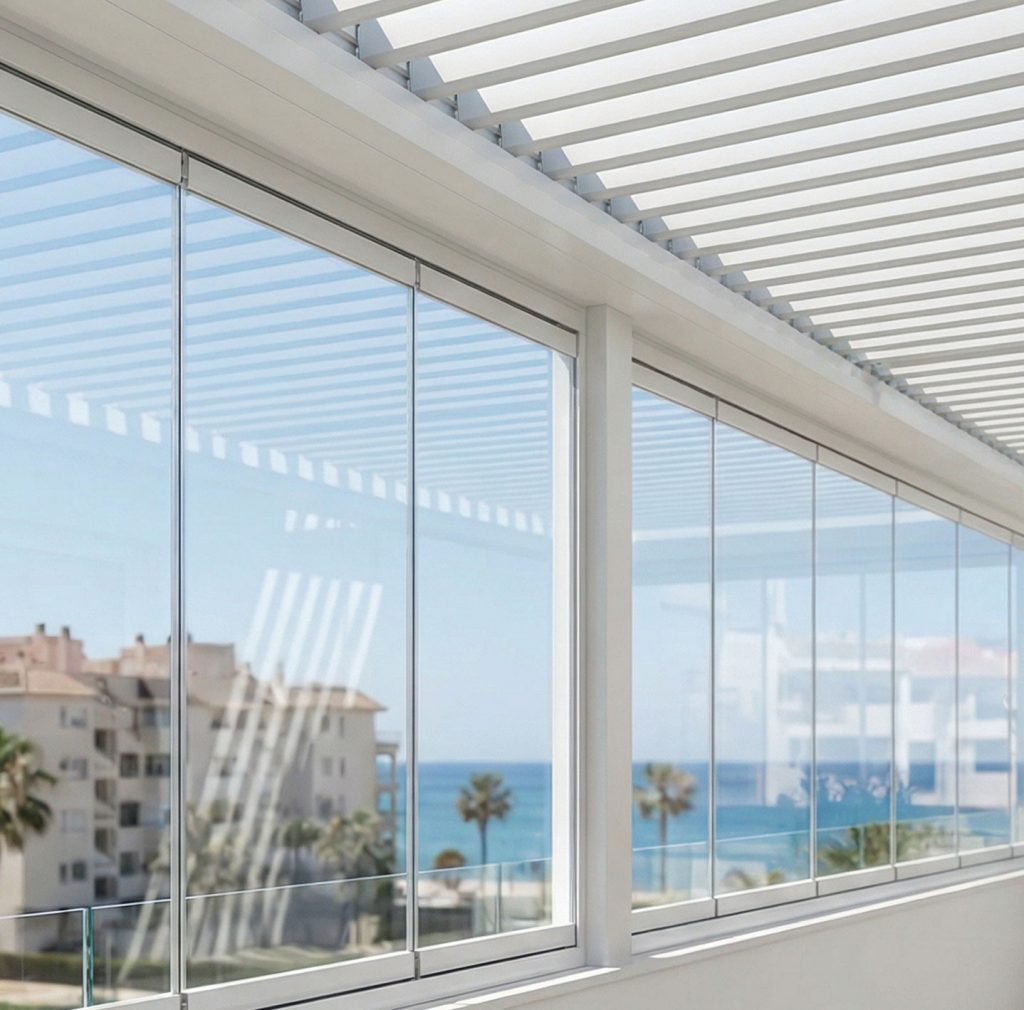
To avoid this, Lever House proposes an ingenious solution: converting the ground floor into a communal courtyard where the boundary between inside and outside the building is blurred, thanks to the transparency provided by the glass curtains.
The building and its inner courtyard, which has a legal obligation to be open to the public at least 364 days a year, were so successfully integrated into the life of the city that they were declared a monument of the City of New York in 1982, thus protecting a material heritage that is both witness and creative agent of one of the turning points in 20th-century architecture.