A glass curtain is a set of tempered glass panels that are disposed within a system that allows to close up or isolate a space both partially or totally. Tempered glass, in turn, is a kid of safety glass that is gradually heated and then is cooled very quickly. This process makes tempered glass four to five times more resistant to breakage than regular glass, and, if it does break, it does so in smaller fragments than traditional glass would, which makes the shards less harmful and dangerous.
That is the reason why we find this kind of glass on inside installations, that endure intensive use and movements from everyday users, like windows, shower screens, glass doors, oven windows, etc.
Glass curtains have been around for hundreds of years, but it’s new technologies that enable us to offer a wider mobility and adaptability range. Thanks to designers, developers and engineers, today’s glass curtains can adapt to virtually any context, as long as a set of basic things are considered.
How do glass curtains work?
Tempered glass panels are placed in a continuous fashion over the railings of one kind of system or another, which allow for different kinds of installation, manipulation and opening options.
At Glaxior we work with two different systems of moving glass curtains: the sliding glazing system, and the retractable glazing system. Here is how each of these two work:
- In the retractable glass curtain system, the glass panel at one end can be rotated and folded inward, clearing the space it previously occupied. The adjacent panel then slides along the tracks to the position previously held by the first glass panel, where it performs the same movement. All the panels end up stacked on one side, outside the rail axis, allowing for a full opening without fixed vertical frames.
- The sliding glass curtain system, on the other hand, is designed so that the panels, rather than folding inward, overlap along the same axis as the tracks. Each panel moves independently, allowing you to choose where the glass panels overlap within the system, and their orientation never changes.

On our Resources page, you’ll find all the technical information about our systems, and for any additional information, please feel free to contact our team.
For which projects is glass curtains installation recommended?
Every project has its own context. That’s why we always recommend working with professional suppliers who can advise you and assess the specific needs of each project. It is necessary to weigh multiple factors, which must be assessed by such professionals, such as those on our technical team or our partners.
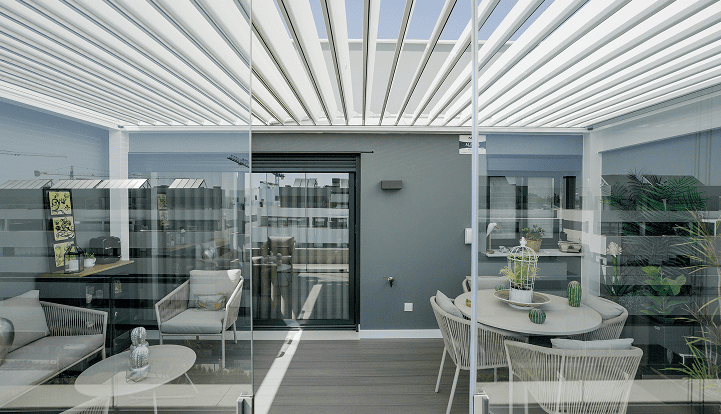
That said, glass curtains can be used in both residential and commercial projects, in indoor and outdoor settings, but they are especially recommended in areas with outdoor access, such as terraces or sunrooms.
Our glass curtains allow you to define and separate virtually any type of space. They drastically improve thermal and acoustic insulation, protect against inclement weather, and significantly help improve and maintain thermal comfort in previously unprotected areas.
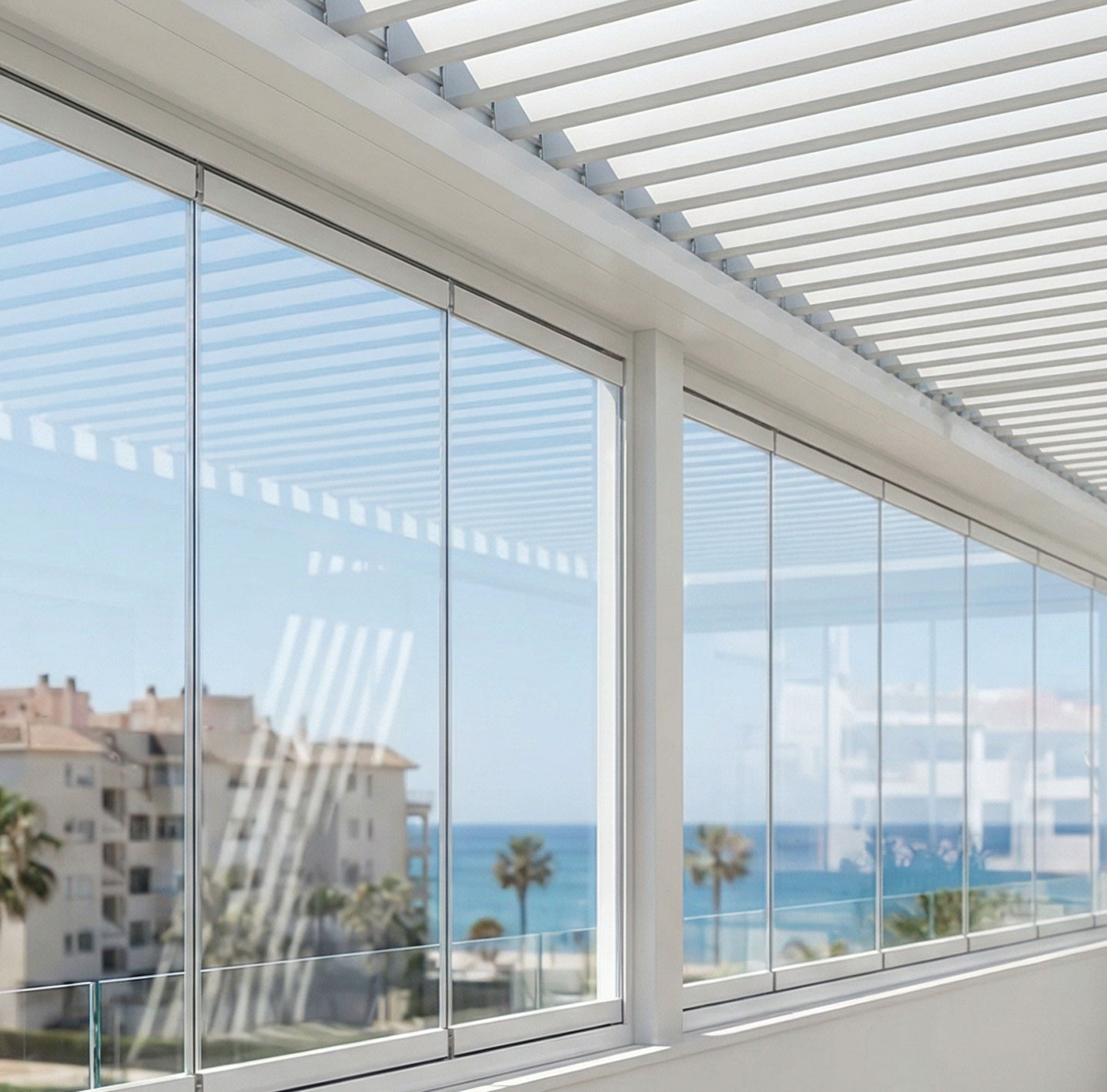
We recommend their use, particularly for projects that benefit from the visual continuity provided by glazing without vertical frames. Especially if a project is surrounded by nature, installing glass curtains is an excellent way to connect the interior with the exterior, creating spaces with unobstructed views where natural light is maximized.