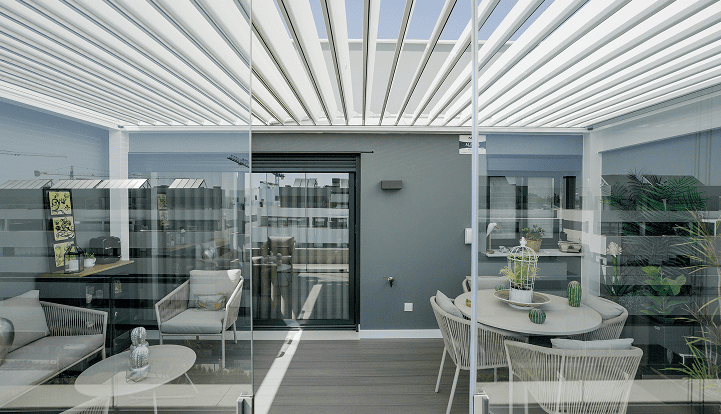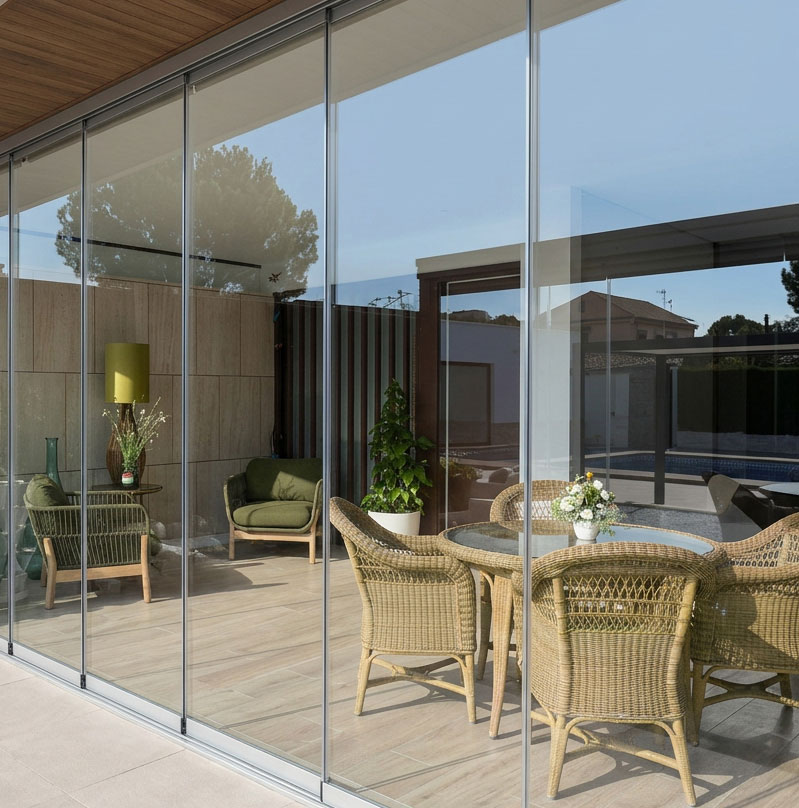
Can you install a glass curtain wall at home without a permit? Let’s take a look at Spanish regulations and what factors you need to consider before proceeding with the installation in accordance with current legislation.
The short answer is that it depends on where you are in Spain; installing a glass curtain wall in a residential building may require a different license or permit. Each autonomous community has its own jurisdiction over urban planning and housing, so regulations vary slightly.
Spanish national regulations for the installation of glazing systems
The regulations governing the installation are organized at the national, regional, and municipal levels. At the national level, there are two regulations that affect the installation of a glass curtain wall:
The Horizontal Property Act: a law that regulates relationships among owners within homeowners’ associations and establishes their rights and obligations. Among other things, this law stipulates that the community’s consensus is required to make any modifications to common areas and elements, such as facades.
In this regard, the installation of glass curtain walls is typically considered a modification of the facade’s appearance, even though these are frameless glazing systems that go unnoticed. In most cases, this consensus requires a three-fifths majority approval by the homeowners’ association.
The Technical Building Code is the other national regulation affecting the installation of glazing. This code establishes the basic requirements for safety, habitability, and energy efficiency. It does not directly address glazing systems, but it could come into play when the installation of a glass curtain wall alters the ventilation, safety, or insulation conditions of a living space.

What regional legislation affects the installation of a glass curtain?
As mentioned earlier, the autonomous communities have their own jurisdiction over urban planning matters, so the answer to this question varies from one community to another. Let’s look at some examples:
–Regional regulations in Andalusia for installing a glass curtain wall: The Andalusian Urban Planning Law regulates any intervention that modifies a building, including enclosures or glazing, provided that these affect the exterior configuration. On the other hand, the Urban Planning Regulations establish that any installation or construction work is subject to prior municipal planning permission (which we will discuss later). In Andalusia, there is some case law that has classified certain glazing systems as removable elements, which reduces administrative requirements since the authorities consider that the function or aesthetics of a facade are not altered when the systems are foldable, retractable, and lack vertical profiles.
–Regulations in Valencia regarding the installation of glazing: the relevant legislation here is the Law on Land Use Planning, Urban Planning, and Landscape. As is the case in Andalusia, these regional regulations classify the enclosure of terraces as urban planning interventions whenever they alter the facade, the volume, or the functionality of a building. In Valencia, it is more common to consider a glass curtain wall as a modifying element, even if its installation does not significantly affect the building’s aesthetics.
Municipal ordinances: the most direct (and strictest) regulation regarding the installation of glass curtains
In addition to state and regional regulations, each municipality has its own zoning regulations, so you’ll need to consult the municipal ordinance of the area where you want to install a glass curtain to determine what permits you need before proceeding with the installation. If you skip this step, you risk receiving a fine from the responsible city council, and they may order the removal of the glazing if it violates said ordinance.
Some municipalities (such as Valencia, for example) require a prior urban planning permit, which is a municipal administrative authorization that can be requested at city hall.
In other towns, a requirement for installation is that the glazing must not alter the building’s aesthetics; if it does, all owners must install the same system to maintain visual consistency. It also depends not only on the municipality but on the neighborhood: some protected historic districts have much stricter restrictions on making modifications to buildings.
Other local governments impose restrictions not on aesthetic changes but on the increase in living space. Depending on whether a folding or sliding glass curtain wall is classified as an enclosure or glazing, its installation would therefore result in an increase in living space, which is prohibited in some municipalities.
In summary: three key points to consider before installing glazing in accordance with regulations
There are three requirements that must be met regardless of the project’s location:
-You must obtain a permit from the city council. The type of permit will vary depending on the applicable municipal ordinance.
-The installation must comply with zoning regulations.
-If the property is a residence or commercial space located within a homeowners’ association, approval must be obtained from at least ⅗ of the association’s members.