What is the difference between a sliding glass curtain wall and a retractable glass curtain wall? Is one better than the other? What kind of projects are each recommended for?
When choosing glazing systems for a project, questions may arise regarding the available options. Enclosing a space with glass curtains is a choice that provides spaciousness, visual continuity, and natural light to any space, but depending on how each system operates, that space can be used in one way or another.
At Glaxior, we offer two types of glazing systems: sliding glass curtains and retractable glass curtains. But what are the differences between them?
Differences in opening mechanisms between sliding and retractable glass systems
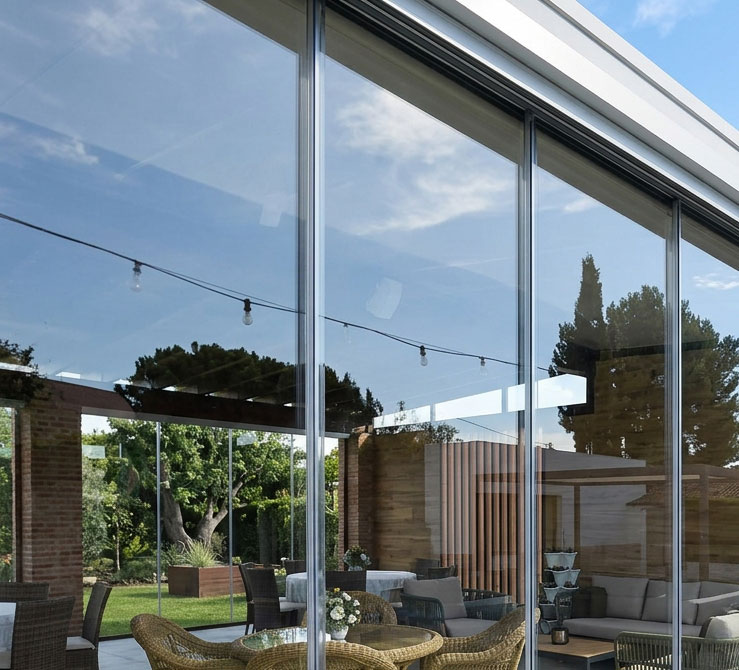
On the surface, the difference between one type of curtain and another is quite obvious. The names of both systems are self-explanatory: sliding glass curtains always remain within their track and slide smoothly along the rails until they stack up on one side or the other, with all the glass panels overlapping to clear the rest of the system.
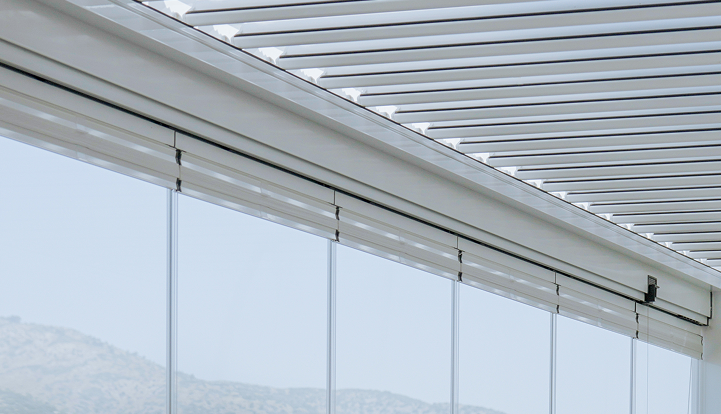
Folding glass curtains, on the other hand, have a similar functionality: the panels slide along the track to one of the ends, where they can be detached from the rails on one side, with the panel remaining anchored to the system on the other. In this way, each glass panel can be folded inward, freeing up the space it previously occupied—which the next panel can then occupy—and so on until the entire space is completely cleared.
Maintenance and safety factors
Differences in opening systems mean that the maintenance required for each curtain wall varies. Our tempered glass panels and the systems that support them require minimal maintenance to maintain their long-term structural integrity, but, from an aesthetic standpoint, they have the same needs as any other glazing. To remove rain stains or dust buildup, cleaning must be performed on both sides of the glass, especially on curtain walls exposed to the elements.
Given the nature of each system, it is necessary to consider the available space around the curtain installation to ensure that such maintenance can be performed safely for the person carrying it out, and it will be necessary to choose one system or another depending on the project’s environment, which brings us to the next point.
What kind of projects is each system recommended for?
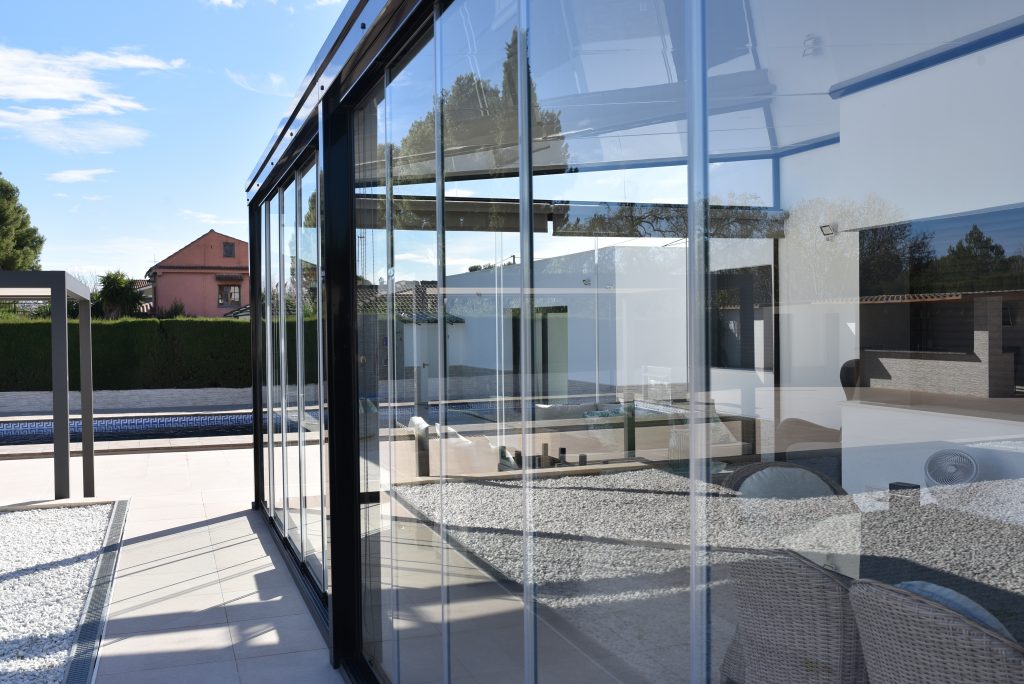
In the sliding system, the orientation of the panels never changes. This means that the space must be accessible from both the front and back of the system to allow access to the entire glazed surface. Therefore, it is an ideal system for dividing spaces on terraces, in gardens, or even indoors. Its practicality and smooth operation when handling the glass panels—which can be easily moved with just one hand—make it a perfect choice for intensive daily use in high-traffic areas.
On the other hand, folding glass curtains are the way to go for glazing on facades and large windows. The system’s adaptability allows for easy, independent, and safe cleaning and maintenance.
Both glazing systems are compatible with our bioclimatic pergolas, which, unlike other models, do allow for the installation of retractable curtains. However, while these are the general guidelines typically followed, every project is different and may have specifications that require unique decisions. That’s why our technical team offers specialized consulting services so you can make the best choices for your clients and give your projects the leap forward they need.
For installers and distributors
Bring a frameless glass curtain system to your next project
Glaxior manufactures retractable and sliding glass curtain systems for professional projects. Review the technical documentation or talk to our team about product selection, project support and distribution.